
Obataye Named Argentina's 2025 Horse of the Year… But Was He Truly the Best?

Crossed Results and Questionable Criteria Mark Controversial Pellegrini Awards Night; Diffuse standards and debatable decisions fueled one of the most disputed editions in recent years, with Juan Carlos Bagó a deserving Pellegrini of the Year honoree

By Diego H. Mitagstein
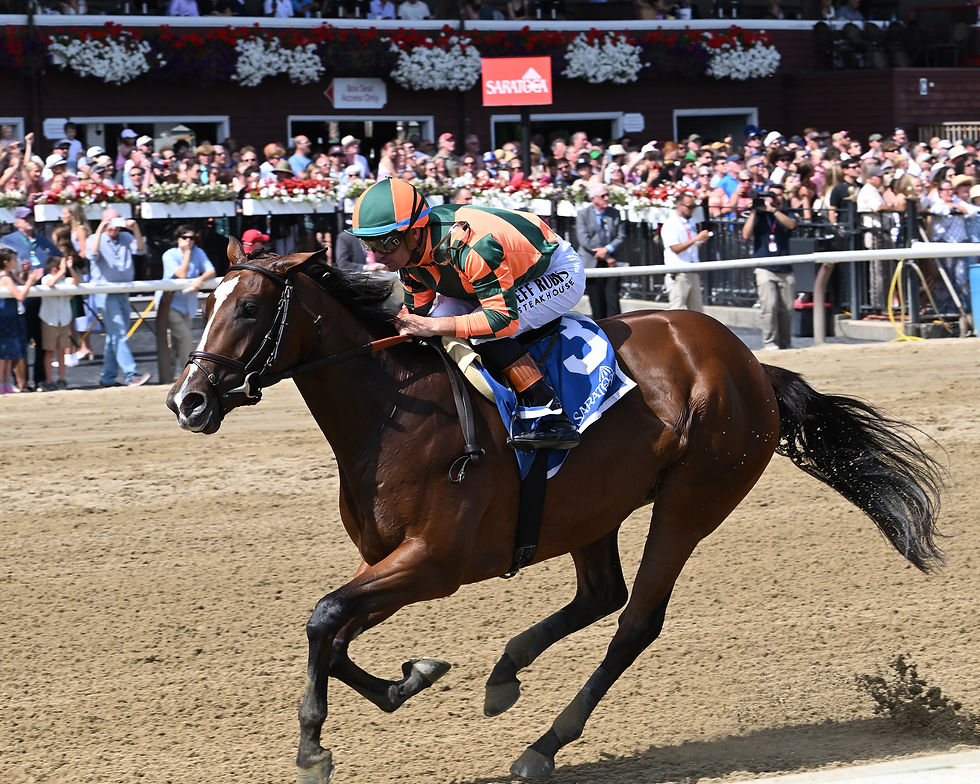
Was winning a single race enough to be named Horse of the Year? That was the lingering question Thursday night following the coronation of Brazilian standout Obataye as Argentina’s top horse of 2025.
His victory in the Gran Premio Carlos Pellegrini (G1) proved sufficient for the son of Courtier to claim the sport’s highest honor, prevailing over rivals with far more consistent campaigns such as Need You Tonight (Hat Ninja), El Exito (Il Campione) and The Gladiator’s Hat (Hat Ninja). All of this without even mentioning the glaring omission of Charm (Strategos), who swept the female divisions and embodied consistency throughout the season.
To be clear: this is not about questioning whether Obataye is a great horse—he unquestionably is. The issue lies in defining what exactly is being rewarded. When Xin Xu Lin (Wondertross) and Nao da Mais (T.H. Approval) captured the Pellegrini in past editions, neither went on to secure Horse of the Year honors.
In truth, the 47th edition of the Carlos Pellegrini Awards, held at San Isidro, generated widespread debate due to inexplicable omissions, questionable inclusions, and a lack of coherence—responsibility that falls squarely on those entrusted with voting. Too many appeared to exercise that privilege without rigor, and at times with a troubling lack of engagement.
The same debate has surfaced elsewhere. In Uruguay, Ever Daddy (Daddy Long Legs) earned Horse of the Year honors after winning the Gran Premio Ramírez (G1). In the United States, Japan’s Forever Young (Real Steel) was named Champion Older Horse following his lone domestic start, a victory in the Breeders’ Cup Classic (G1).
Some may argue that Obataye won the most important race of the year, but selecting the best horse should be based on the entirety of a campaign. The Stud Río Iguassu runner was also named Champion Stayer, yet—paradoxically—lost to Need You Tonight in the Champion Older Horse category.
How can two categories, evaluated on the same body of work, produce conflicting outcomes? It defies logic. Either one horse prevails across the board, or the other does—but splitting the honors only exposes inconsistencies. If, for some voters, the Gran Premio Latinoamericano (G1)—run in Gávea and also won by Obataye—played a role, the issue becomes even more concerning, bordering on a technical oversight. But given the composition of the voting body, perhaps it is no surprise.
Meanwhile, Charm was named Champion 2-Year-Old Filly, Champion 3-Year-Old Filly, and Mare of the Year. Her dam, Roman Princess (Roman Ruler), earned Broodmare of the Year honors. Yet the Triple Alliance homebred—bred and owned by John Behrendt, who was in attendance—was not even nominated for Horse of the Year, despite arguably deserving serious consideration.
Among other categories, Drive Joy (Fortify) defeated Amor de Contramano (Gouverneur Morris)—as he had on Estrellas Day—to be named Champion 2-Year-Old Male, while Gordianus (Señor Candy) secured Champion 3-Year-Old Male honors following his victory in the Gran Premio Nacional (G1).
Knows All (Le Blues) was a logical choice as Champion Older Mare, while Need You Tonight claimed Champion Older Horse over Obataye. Le Cornette (Emmanuel) ended the reign of Labrado (Le Blues) to take Champion Sprinter honors, and Earth God (Cosmic Trigger) was named Champion Miler over El Exito—despite the latter being shortlisted for Horse of the Year while the former was not, another inconsistency.
Among professionals, Nicolás Martín Ferro was named Trainer of the Year—though the absence of José Blanco from the nominees raised eyebrows. Kevin Banegas earned his first Jockey of the Year title, while Lucas González made history by repeating as Apprentice Jockey of the Year.
El Paraíso was named Breeder of the Year, Firmamento took Owner of the Year, Orpen (Lure) was Broodmare Sire of the Year, and Il Campione (Scat Daddy) Stallion of the Year.
At the end of the night, however, there was one unanimous decision. Juan Villar Urquiza, president of the Jockey Club Argentino, selected Juan Carlos Bagó as Pellegrini of the Year—an honor few, if any, in Argentine racing deserved more than the man behind Haras Firmamento.



Comments